Bucharest Conducting Academy 2026

Bucharest Conducting Academy / & Bucharest Symphony Orchestra presents the

Edition VIII, 2026

Winners Awards Gala Concert

JOHN AXELROD
JOHN AXELROD

Fate is inevitable. Destiny has a purpose. 

Both themes have attracted the majority of composers to portray the human condition in music either as a tragic fate or a date with destiny. From Mozart’s Don Giovanni to Beethoven’s 5th Symphony, from Verdi’s La Forza del Destino to Wagner’s Siegfried Idyll, to Brahms’ epic Symphony No. 1, to Tchaikovsky’s Symphony  No.4, these works are only a few among the many in the repertoire, but are all significant to a conductor’s technique, canon and craft.

These masterpieces represent fate through musical motifs, dramatic narrative, and specific thematic symbolism.

With just 4 famous notes, da-da-da-dum, Beethoven turned his c minor symphony into a dramatic image of “Fate knocking at the door”.

It took Brahms 14-21 years to complete his first Symphony.  Those same 4 rhythmic notes of Beethoven haunted Brahms, resulting in his own c minor harmony as the timpani acting as fate no longer knocks but instead pounds on the door.

Mozart composed Don Giovanni’s debauchery as a destiny with the devil.  In contrast, while Wagner uses musical themes from the opera Siegfried (which is about destiny), the Siegfried Idyll removes the operatic struggle, transforming Wagner and his family into a private, serene idyll on Lake Lucerne.

Tchaikovsky used a recurring “fate motif” in his symphonies, heard in the opening brass fanfare, perhaps taken from Verdi’s three note brass fate motif in La Forza del Destino. Tchaikovsky described the theme as a fatal force that hinders the pursuit of happiness.

And Rachmaninov, who overcame personal depression, reflects on the struggle of humanity in his monumentally difficult Piano Concerto no. 3, considered the Mt .Everest of concerti. While the concerto doesn’t have a stated theme of “fate,” its intense emotional weight, dark themes, and heroic struggles often lead to it being interpreted as a battle with and victory over destiny.

All these composers, and so many more from Berlioz to Mahler to Orff to Shostakovich, often used these themes of fate and destiny to grapple with personal tragedy, philosophical questions, or the emotional conflicts of their respective lives and epochs.

Today is no different. We are witnessing a change to the world order and with that will emerge new voices and interpretations about fate and destiny.

The great American poet Walt Whitman summed it up eloquently in his poem: O Me! O Life!, with the question asking “what good among these?”

And his response is ours as musicians and conductor.

Answer: “That life exists and Identity. That the powerful okay goes on, And you may contribute a verse.”

That is what all these composers have done with the forces of destiny, and what we do as interpreters and performers.  We contribute our verse.  Come to Bucharest to contribute yours and discover your destiny.

John Axelrod

Bucharest, 2026


JOHN AXELROD BY ISTVÀN KOHÀN

The Masterclass

July 2-5, 2026
Welcoming ceremony on July 2 @ 9:30am

The Competition

July 6-8, 2026
Welcoming ceremony on July 6 @ 9:30am

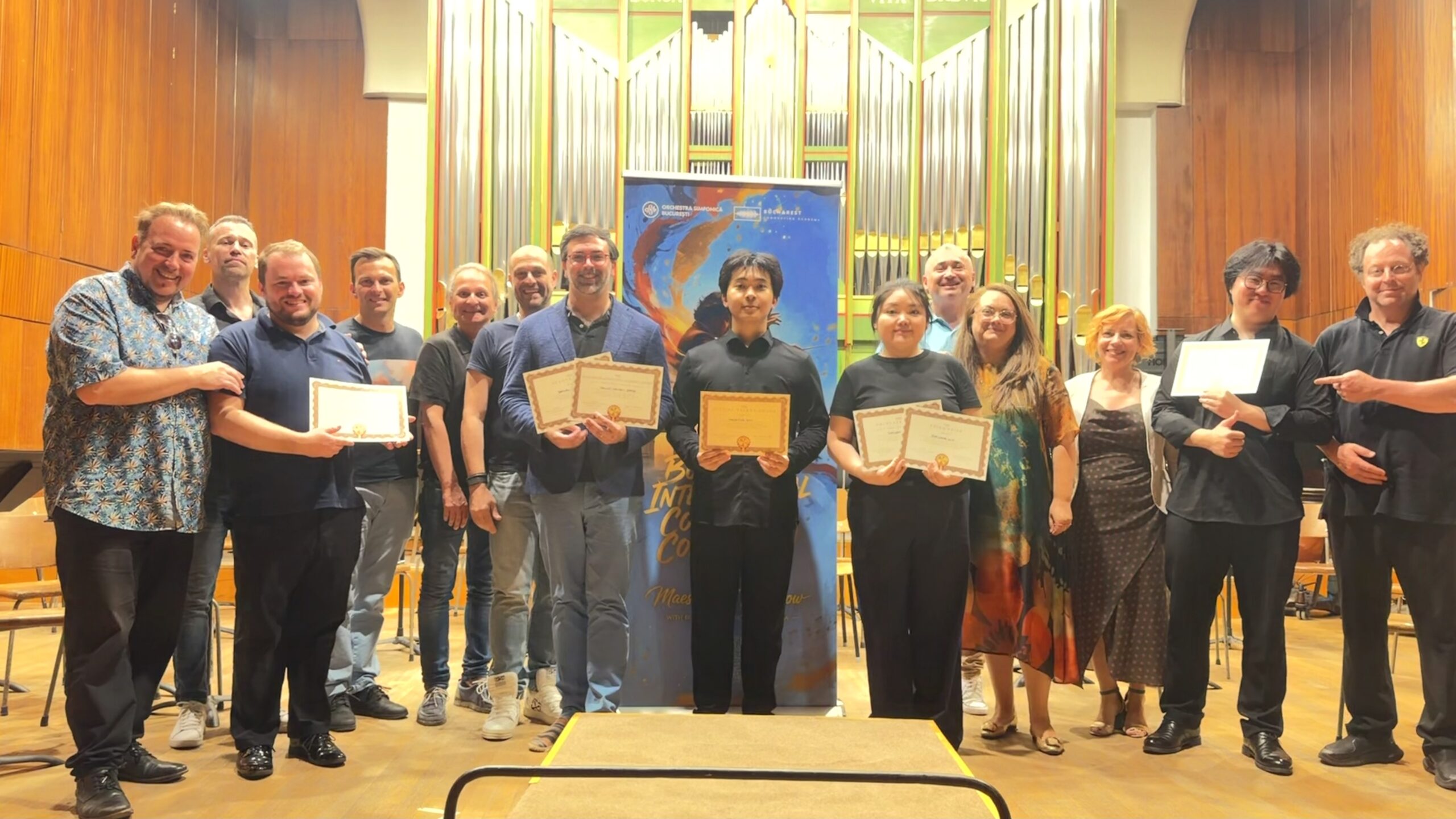
Bucharest Conducting Academy International Conducting Competition 2025
The 2024 Edition Winners

”Congratulations to all our previous
participants & winners!”

Bucharest Conducting Academy provides the best experience in Romania that has the required resources to help the aspiring masters of orchestral direction to achieve their goal: to learn how to conduct an orchestra. And much more. Attending our masterclasses you will learn how to develop the essential technique and proper skills and furthermore, the necessary support for a career in orchestral conducting.

Meet the winners | Apply